
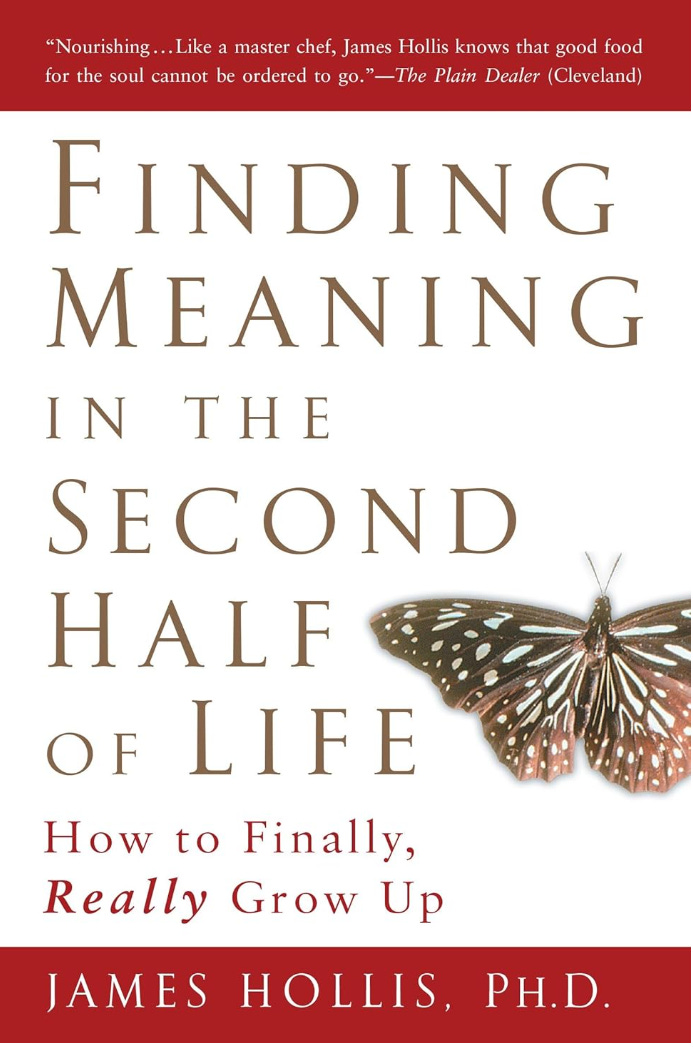
Finding Meaning in the Second Half of Life Book Review
Facing wounds, roles, and the work of becoming

TL;DR
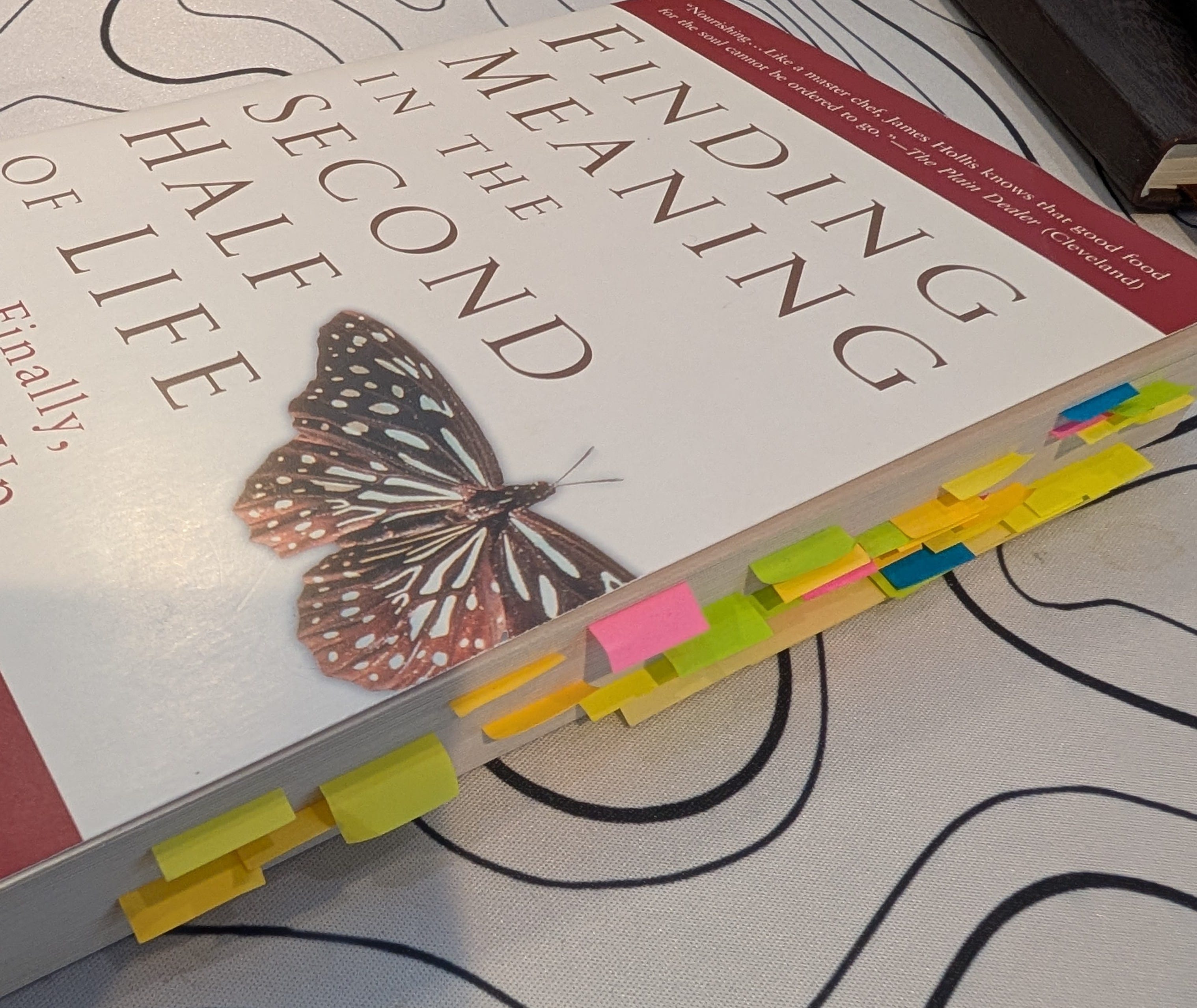
A thoughtful, often dense exploration of midlife and beyond. Hollis blends psychology and philosophy to frame the second half of life as a search for meaning, not happiness. It’s occasionally too abstract and philosophical for my taste, but I did manage to find quite a few things worth remembering (see my physical copy with highlights below).
Key Themes
Many psychologists are behaviorists, focusing only on productive behaviors. They tend to focus on changing behavior and not getting to the root of our discomfort or issues.
Our culture worships power, materialism, hedonism, and narcissism.
By 40–50, if you’re not appalled by some life choices, you’re unconscious or lucky. I know there are times when I look back at my decisions and perspectives and shake my head.
Some of The Wounds We Carry
Overwhelming: the feeling of powerlessness in society, culture, world events, even family.
Insufficiency: the world cannot reliably meet our needs. Much of daily life is reflexive response, not conscious choice.
Relationships and Family
We expect too much from relationships; the fantasy of “the one” can keep us from growing up.
Many relationships disappoint because we expect too much of them. We don’t meet our partner—and ourselves—where we are presently. We do not have reasonable expectations about what the relationship will solve (and what it won’t).
The cure for loneliness is solitude: developing a conscious relationship with oneself.
Over the years, I have come to appreciate that so few of us are comfortable being in solitude.
Families often orbit around their most damaged member.
I think about this one a lot. I can think of more than a few people in my life where some sort of trauma continues to affect one member of the family. And that family member’s mental health can commandeer any energy you have.
The greatest burden on a child is the unlived life of their parents.
This point hit me hard. Not only did I reflect on my childhood, but also on those of my closest friends. All the conversations over the years, and so many of them revolving around doing what their parents wanted or defined as successful.
I also think about this with my own kids. In what ways am I consciously or unconsciously nudging my children toward my version of “success”?
Midlife Pressures
Adults in midlife often face the “double burden” of caring for children and aging parents at once.
Many adults who didn’t grow up by age 40 become more intense versions of themselves by age 70. I bet we all have examples of people like this.
Men in particular struggle with retirement: work defines identity, and losing it can bring depression, boredom, and even earlier death. (Golf doesn’t help.) Such transitions are always bittersweet. As men, we are often taught to bury our emotions during times of turmoil.
Women, on average, weather retirement better thanks to stronger emotional support networks beyond work.
Success, Suffering, and Meaning
Consumerism promises comfort to the body but rarely nourishes the soul. I see and hear about many miserable people driving nicer cars than me.
Pain can be alleviated; suffering is spiritual. Its purpose is to jolt us from complacency, forcing us into life’s deeper questions.
“Swamplands of the soul”: guilt, grief, betrayal, doubt, depression, addiction, anxiety — unavoidable, but necessary teachers.
Questions Hollis Leaves Us With
At the end of the book, Hollis asks the reader some questions that are aimed to focus your energy on reflecting on some things in your life. A couple questions are:
What brought you here, at this moment in your life?
Why do things feel “not quite right” even when going well?
Why does life feel like a script written elsewhere?
Is your life too small for your soul’s desire?
My Take
The book was valuable. Hollis articulates things in a unique way, and some of his insights hit hard — especially around relationships, midlife burdens, and how suffering shapes us. At times, though, it was too philosophical, too abstract to sit with for long stretches. I would have appreciated more concrete stories of real people navigating the second half of life. There were real-life examples of patients, but they were not deep enough for my liking.
Still, for anyone entering midlife — or reflecting on meaning beyond career and family roles — it’s worth reading.
Rating: 7/10
Thanks for reading.
Dean